



Rapid Submersible Pump Repair & Service in Mission, TX
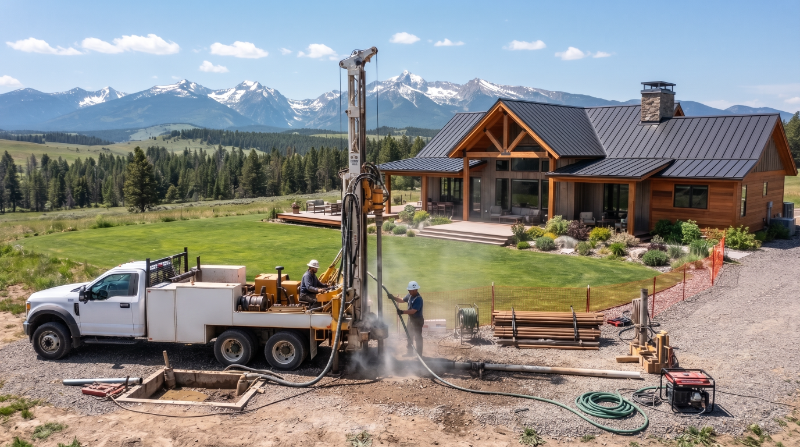
No water? Low pressure? Rapid pump short-cycling? Our heavy-hoist crane trucks and diagnostic technicians are staged 24/7 across Hidalgo County to pull, repair, and replace well pumps.
Same-Day Pulls
Boom crane trucks ready to safely retrieve deep submersible pumps.
Motor Diagnostics
Ohm testing windings, capacitors, control boxes, and lightning surge units.
Pressure Tanks
Diaphragm bladder replacements & constant pressure VFD upgrades.
Request Emergency Well Pump Diagnostics or Pulling
When water pressure drops to zero in South Texas heat, you cannot afford days of delays. We carry replacement Franklin Electric, Grundfos, and Goulds submersible motors and pressure switches on our trucks for same-day water restoration.
Electrical & Control Box Diagnostics
We check capacitors, contact relays, pressure switches, and supply voltage before recommending a pull.
Heavy Boom Truck Pump Pulling
Safe mechanical extraction of drop pipes without damaging casing or electrical wiring.
TDLR Licensed Repair Technicians
Fully insured, bonded, and certified under Texas Department of Licensing and Regulation standards.
Request Emergency Pump Repair
Tell us your pump symptoms or pressure issues for immediate dispatch priority.
Complete Technical Guide to Submersible Well Pump Mechanics, Electrical Troubleshooting & Pressure Tanks
How our TDLR-certified technicians diagnose motor burnouts, control box failures, waterlogged bladder tanks, and drop-pipe leaks to restore water pressure across Hidalgo County.
1. How Submersible Water Well Pumps Work in South Texas Wells
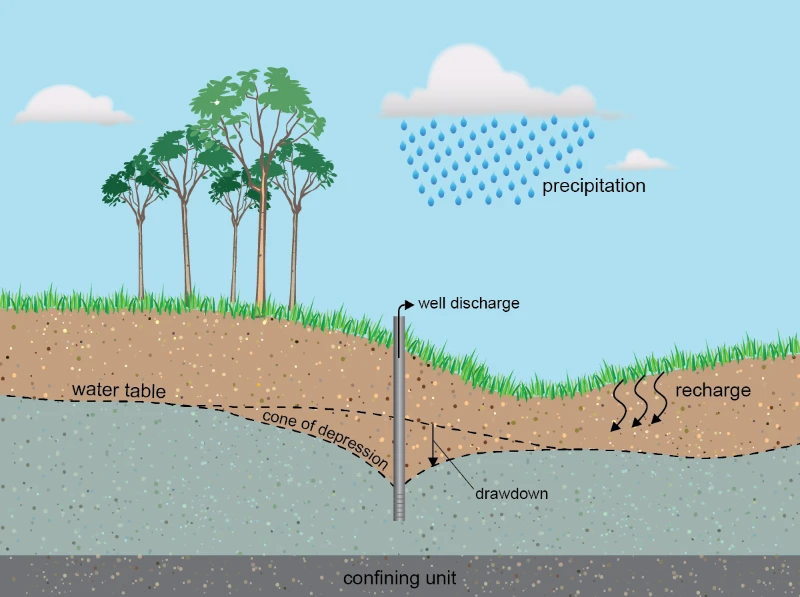
Unlike shallow jet pumps that sit on the surface and struggle to draw water from depths greater than 25 feet, modern residential and agricultural water wells in Mission, Palmview, Alton, Sharyland, and Peñitas utilize multi-stage submersible centrifugal pumps submerged hundreds of feet below ground inside the well casing.
A submersible pump assembly consists of two distinct components bolted together:
- The Submersible Motor: A hermetically sealed, water-lubricated stainless steel electric motor (typically 3-wire 230V single-phase or 3-phase) manufactured by industry leaders like Franklin Electric, Grundfos, or Goulds. Operating at 3,450 RPM, the motor generates the torque required to spin the pump shaft.
- The Multi-Stage Wet End (Pump End): A series of stacked thermoplastic or stainless steel impellers and diffusers. As water enters the intake screen between the motor and pump end, each successive impeller increases hydraulic pressure, pushing water up through the drop pipe, past spring-loaded check valves, and into your home's pressure tank.
Because these pumps operate under immense hydrostatic head pressure and continuous electrical loads, even minor voltage surges from South Texas thunderstorms or sand abrasion can cause mechanical degradation over time.
2. Step-by-Step Electrical & Mechanical Troubleshooting Protocol
When you experience a complete loss of water pressure, guessing which component failed can waste hundreds of dollars on unnecessary parts. Our TDLR-licensed pump technicians follow a systematic electrical and mechanical testing protocol before we ever deploy our hoist trucks:
Step 1: Control Box & Capacitor Diagnostic Testing
For 3-wire submersible pumps, the starting capacitors, running capacitors, and potential relays are housed in an above-ground control box. Extreme ambient temperatures in Mission can dry out capacitors or fuse relays. We test microfarad ratings and relay contacts using digital multimeters—often restoring water in minutes without pulling the pump.
Step 2: Megohmmeter Insulation Resistance (Megger) Testing
If breakers trip repeatedly, we use a 500V/1000V megohmmeter to test the insulation resistance of the underground wire leads and submersible motor windings. A low resistance reading (under 0.5 megohms) indicates a short circuit, insulation breakdown, or water ingress inside the motor seal.
Step 3: Check Valve & Drop Pipe Leak Detection
If your pump runs continuously without shutting off or if you hear water rushing back down the casing when the motor stops, a check valve has failed or a split has developed in the drop pipe. We perform pressure-decay tests to isolate pipe leaks.
3. Pressure Tanks, Bladder Failures & Rapid Pump Cycling
One of the most dangerous conditions for a submersible well pump is rapid short-cycling—when the pump switch clicks on and off every few seconds while a shower or hose is running. Short-cycling causes intense electrical overheating that can destroy a $2,500 submersible motor in just a few weeks.
Why Do Pressure Tanks Fail?
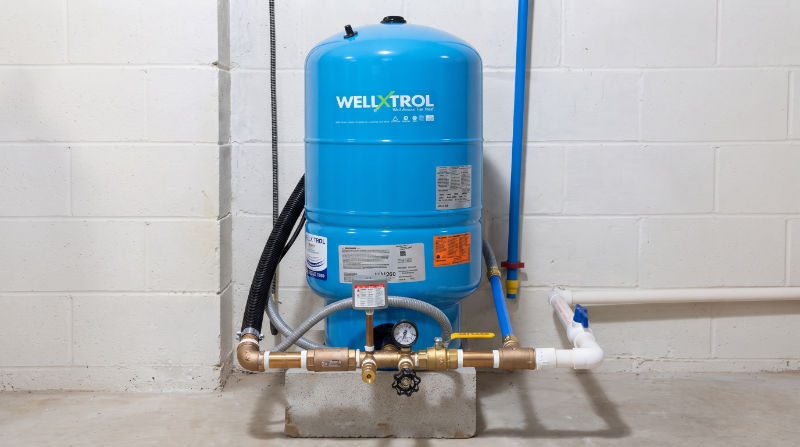
Captive-air pressure tanks (such as Well-X-Trol or Flexcon) use an internal butyl rubber diaphragm to separate compressed air at the top from water at the bottom. Over years of service, the rubber bladder can rupture or lose its pre-charge air cushion. When a tank becomes "waterlogged," there is no air cushion left to compress, causing the pressure switch to trigger immediately every time a faucet is opened.
Our Pressure Tank Replacement & Upgrades:
- Heavy-Duty Deep-Drawn Steel Tanks: We install corrosion-resistant epoxy-coated steel tanks with antimicrobial butyl bladders sized specifically to your pump's GPM output.
- Solid Brass Tank Tee Assemblies: We replace corroded galvanized or brittle plastic fittings with heavy-duty solid brass manifolds, integrating a new square D pressure switch, liquid-filled pressure gauge, boiler drain valve, and safety relief valve.
4. Variable Frequency Drive (VFD) Constant Pressure System Upgrades
For homeowners in Hidalgo County who are tired of fluctuating water pressure in the shower whenever the lawn sprinklers kick on, we offer state-of-the-art Variable Frequency Drive (VFD) Constant Pressure Controllers (such as Grundfos SQE or Franklin Electric SubDrive).
City-Like Constant Pressure
A VFD controller uses a solid-state pressure transducer to monitor water line pressure 10 times per second, smoothly ramping the submersible pump motor speed up or down to maintain an exact, rock-steady 60 PSI regardless of demand.
40% Electrical Energy Savings
Standard pumps always run at 100% full RPM even when drawing a glass of water. VFD drives only draw the exact electrical current required for the active water demand, significantly lowering your monthly AEP utility bill.
5. Our Heavy Hoist Rig Fleet: Safe Pump Pulling & Wire Replacement
When a submersible pump motor burns out or drops hundreds of feet inside a well casing, pulling it safely requires specialized heavy equipment. Attempting to pull a 300-foot pump assembly by hand or with makeshift vehicle hitches can snap drop pipes, drop the pump permanently into the aquifer, or cause severe bodily injury.
Mission Water Well Services maintains a dedicated fleet of hydraulic hoist pump trucks equipped with automated pipe clamps, wire reels, and heavy-duty derrick masts. During every pump extraction and replacement:
- Full Casing & Borehole Inspection: While the pump is out of the well, we inspect casing walls for calcium scaling, sand entry, or root intrusion.
- New Heavy-Duty Submersible Wire & Torque Arrestors: We install double-jacketed submersible copper pump cable secured with stainless steel banding and neoprene torque arrestors to prevent pipe twisting inside the casing.
- Stainless Steel Check Valves: We install brand new spring-loaded check valves to ensure zero back-spin when the pump cycle completes.
Frequently Asked Questions About Well Pump Repair in Mission, TX
What is the lifespan of a residential submersible well pump in South Texas?
With proper pressure tank maintenance and electrical surge protection, a high-quality stainless steel submersible pump in Hidalgo County typically lasts between 10 and 15 years. However, rapid short-cycling from a waterlogged tank or severe sand pumping can shorten lifespan to under 3 years.
Why did my water suddenly turn brown or sandy after a thunderstorm?
Thunderstorm lightning strikes or sudden utility power surges can cause submersible pump motors to reverse spin momentarily or disturb accumulated sediment at the bottom of the well borehole. If sediment persists after flushing faucets for 30 minutes, call us to check for casing seal breaches or screen damage.
How quickly can your dispatch team arrive for emergency pump repair?
For emergency out-of-water calls in Mission, Palmview, Alton, Sharyland, and Peñitas, our dispatch team typically arrives on-site within 1 to 3 hours. We carry fully stocked service trucks with replacement Franklin motors, pressure tanks, control boxes, and switches to complete 90% of repairs on the very first visit.
Out of Water? Don't Let a Burned Pump Stop Your Home or Ranch
Call our local Mission, TX dispatch team immediately. Licensed TDLR technicians ready with heavy hoist trucks and genuine replacement motors.